Introduction
Endoscopic Variceal Ligation (EVL) is a common treatment for esophageal varices. Esophageal varices are swollen veins in the food pipe. These veins can bleed, which is dangerous. Because of this risk, EVL is important. It helps stop bleeding and saves lives. Many people with liver disease may need this treatment. In this blog, you will learn what EVL is, how it works, and what to expect.
What are Esophageal Varices?
Esophageal varices are enlarged veins in the lower part of the esophagus. The esophagus is the tube that carries food from your mouth to your stomach. These veins swell when blood flow to the liver is blocked. Often, this happens because of liver disease, such as cirrhosis. As a result, blood finds new paths through smaller veins. These veins are weak and can burst easily. If they bleed, it can be life-threatening.
What is Endoscopic Variceal Ligation (EVL)?
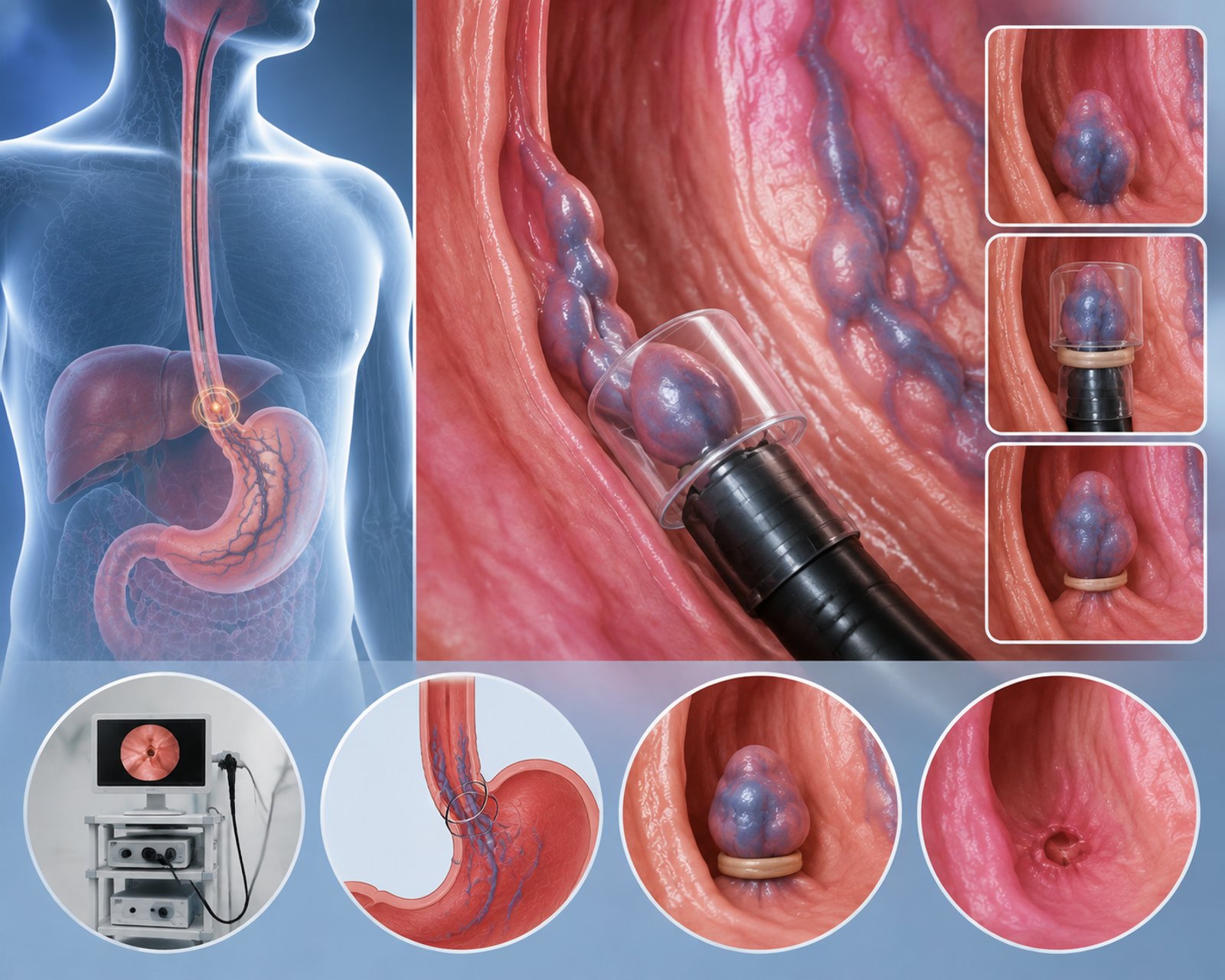
Endoscopic Variceal Ligation (EVL) is a medical procedure. Doctors use a thin, flexible tube called an endoscope. This tube has a camera and a light. During EVL, doctors place small rubber bands around the swollen veins. These bands cut off blood flow to the varices. Over time, the veins shrink and fall off. This treatment is safe and effective for most people. It is often used as the first choice to treat or prevent bleeding from esophageal varices.
Symptoms and Risks of Esophageal Varices
Many people with esophageal varices do not have symptoms until the veins bleed. However, some warning signs may appear. For example, you may notice:
Because bleeding can happen suddenly, it is important to seek help right away. Untreated bleeding can lead to shock or even death.
How is EVL Performed?
The endoscopic variceal ligation procedure is simple and quick. Here is a step-by-step overview:
Most people go home the same day. However, you may need someone to drive you home.
Benefits and Effectiveness of EVL
EVL offers many benefits as a treatment for esophageal varices. For instance, it:
According to experts, EVL is highly effective. Most patients have good results after the procedure. In fact, studies show that EVL lowers the chance of bleeding and improves survival rates.
Possible Risks and Side Effects
Although EVL is safe, some risks and side effects can occur. These may include:
Most side effects are mild and go away on their own. However, if you have severe pain, fever, or trouble breathing, contact your doctor right away.
Recovery and Aftercare Tips
After EVL, you can usually return home the same day. To help your recovery, consider these tips:
Because some people need more than one treatment, regular check-ups are important. If you notice any unusual symptoms, call your doctor.
Prevention and Lifestyle Guidance
While EVL treats esophageal varices, you can also take steps to prevent problems. For example:
Because liver health is key, follow your doctor’s advice closely. Early care can help prevent new varices from forming.
Conclusion
In summary, Endoscopic Variceal Ligation (EVL) is a safe and effective treatment for esophageal varices. It helps prevent dangerous bleeding and improves quality of life. If you or a loved one has liver disease, talk to your doctor about EVL. For personalized advice on esophageal varices and EVL treatment, consult a gastroenterologist Dr. Sandeep Kumar.